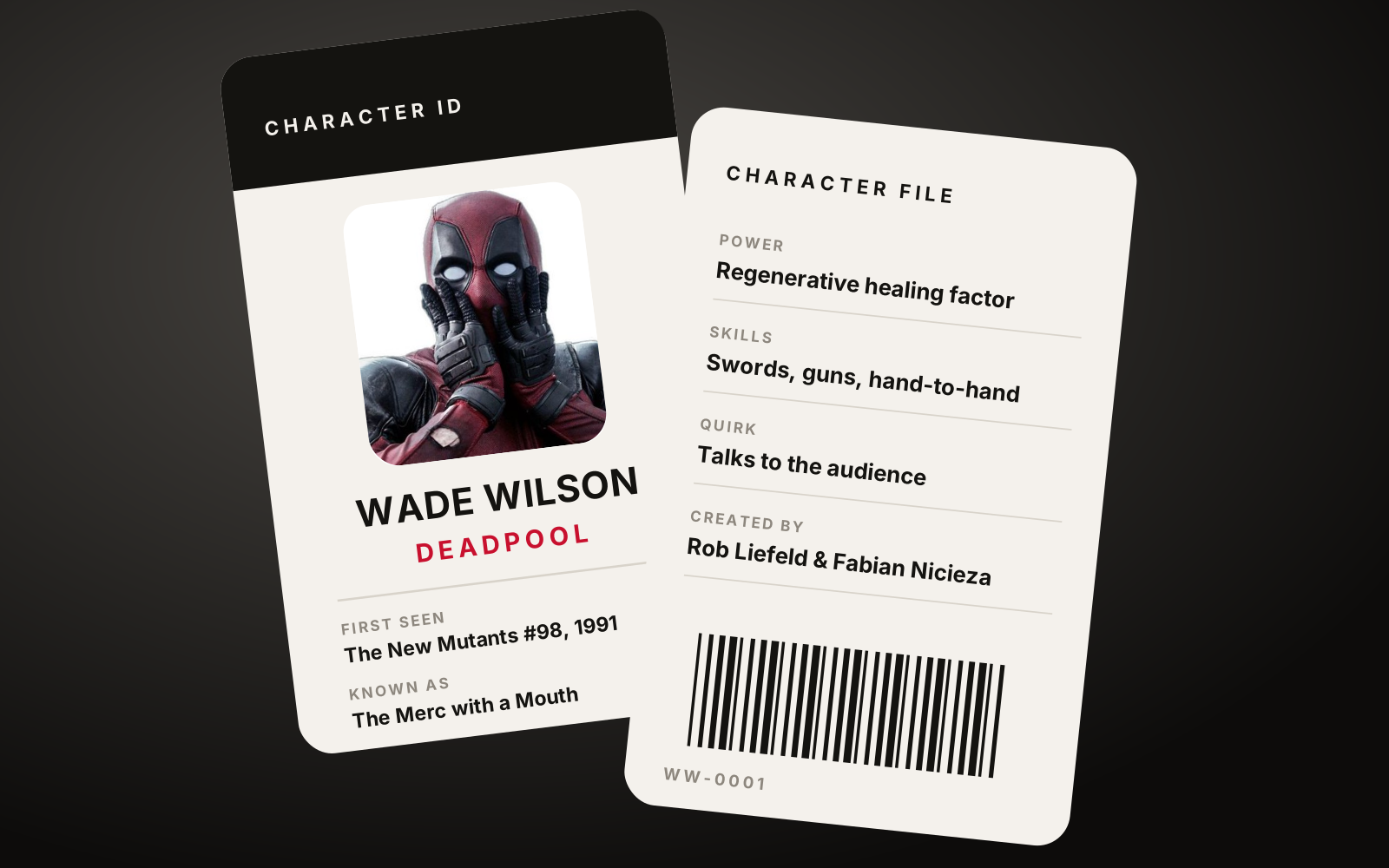
Not every useful thing starts as a project. This one started with a colleague being on leave.
I'm a design lead. My graphic designer was away for a week, and some of her tasks — ID cards among them — had become urgent. They were hers, but they needed doing, so I picked them up.
Creating an ID card means dropping in a photo, changing the text, exporting, and doing it again for the next person. I made two and felt like a robot. That was the moment I thought: this can be automated.
Who is it for?
I opened Claude and started with the question that matters most: who would actually use this? The answer was HR.
My first idea was a one-time job. HR already keep an Excel sheet with everyone's details, so the tool could read the sheet and generate every card in bulk.
Why bulk was off the table
Then I talked to HR, and the idea fell apart. Making an ID card needs supervision on very small things — a spelling, a photo crop, a designation. One small error and the whole print run's cost is gone.
So a bulk generator was the wrong tool. What they needed was something that makes one card quickly while a person watches every detail.
What I built
I used some vibe coding. I gave Claude the ID card template and the details each card needs, and asked for:
- A live preview that updates as the details are typed.
- Controls to adjust the photo inside the card.
- Separate downloads for the front and the back.
Testing and shipping
It's a small project, so I gave it to QA for a day. They found a few small fixes, I made them, and it went live. The QA team uses it happily.
It's a modest tool, but it replaced a repetitive task with a few seconds of careful checking — and it only worked because I asked the people who'd use it before building the version I'd first imagined.
The cards above are an illustration of a sample character card, not a screenshot of the tool. Deadpool is a Marvel character; the details on the card are public facts about him.